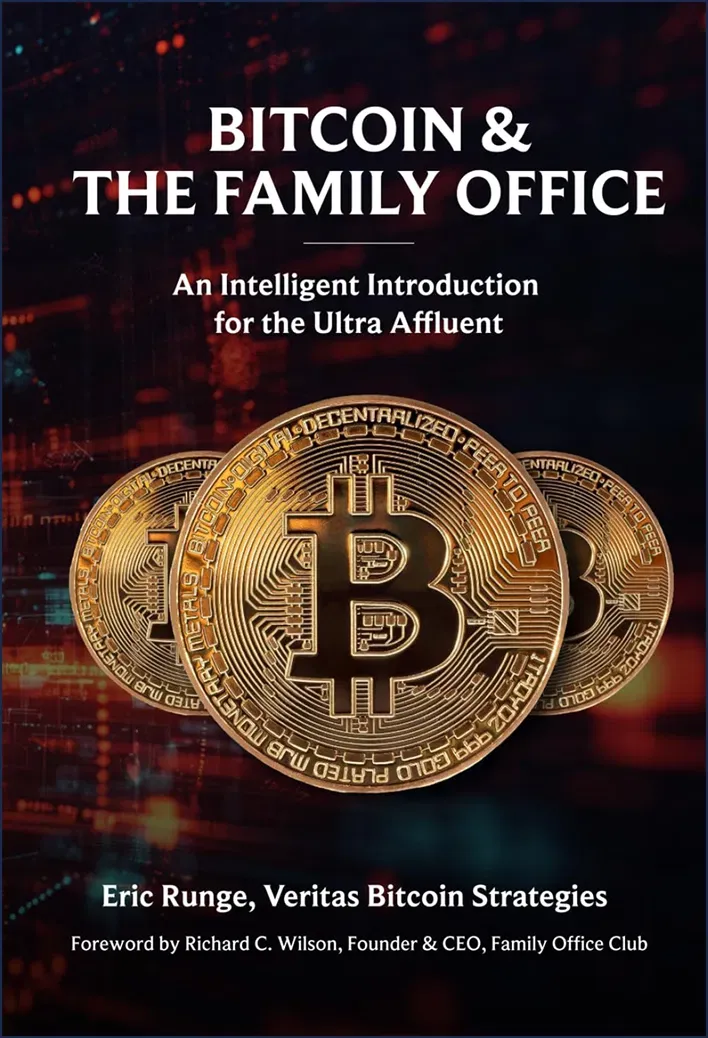
A considered resource for serious capital
This book is written for principals, investment officers and advisers who need a clear way to work through Bitcoin without being pushed toward either advocacy or avoidance. Bitcoin and the Family Office treats the decision as part of a larger investment and governance system, where the most useful output is an explainable process.
The material is intentionally practical. It identifies what needs to be decided, who needs to be involved, which assumptions should be written down and which questions belong with tax or legal counsel. It does not use price targets, performance promises or a required conclusion. A family may decide to allocate, to wait or not to allocate; the quality of the decision depends on the quality of the work around it.
The question behind the allocation
Bitcoin and the Family Office begins with a practical question: what would have to be true for a family office to establish a position it could explain, monitor and govern over time? The book is not a case for a particular allocation. It is a way to structure the work before a position is approved, when the quality of the questions matters more than the confidence of the answer.
A monetary history with a portfolio purpose
The opening chapters place Bitcoin in the longer history of money, settlement and stores of value. That history is included for a specific reason. A family office needs to understand what makes the asset relevant to a multigenerational balance sheet without treating historical context as a prediction. The book separates the monetary question from the portfolio question, then shows where the two meet.
Architecture before percentage
The middle of the book works through portfolio architecture. What is the proposed role of the position? Which existing exposures does it complement or complicate? How should liquidity, drawdown tolerance, rebalancing discipline and reporting be considered? These are deliberately ordinary investment questions, applied to an asset that often attracts extraordinary language.
Governance that survives a generation change
An allocation is not durable because the first investment committee approves it. It is durable when the next generation can understand the mandate, the custody arrangement, the decision rights and the conditions for review. The final chapters address ownership, delegation, documentation and the handoffs that can turn an operational detail into a family-level risk.
Author note
Eric Runge wrote this book for principals and investment officers who need analytical rigor rather than advocacy. The foreword is by Richard Wilson, founder of the Family Office Club. The book is educational and general in nature and is not a substitute for individualized investment, tax or legal advice.
Veritas Bitcoin Strategies LLC is an investment adviser registered with the State of Oregon Division of Financial Regulation, CRD 306768. Registration does not imply a certain level of skill or training and does not constitute an endorsement by any regulatory authority. Advisory services are offered only to residents of states in which Veritas Bitcoin Strategies LLC is registered or is excluded or exempted from registration. Form ADV Part 2A and Form CRS are available at adviserinfo.sec.gov and on request. The content on this website, including books, white papers, articles and any materials delivered by request, is educational and general in nature. It is not investment, legal or tax advice, is not personalized to any individual’s circumstances and is not an offer or solicitation to buy or sell any security or digital asset. No advisory relationship is created by using this site or requesting a resource. All investing involves risk, including possible loss of principal. Bitcoin and other digital assets are speculative and volatile, may lose value rapidly, and are not deposits or obligations of, or guaranteed by, any bank; they are not insured by the FDIC, NCUA or SIPC. Past performance is not indicative of future results, and no outcome, return or protection of capital is guaranteed.